
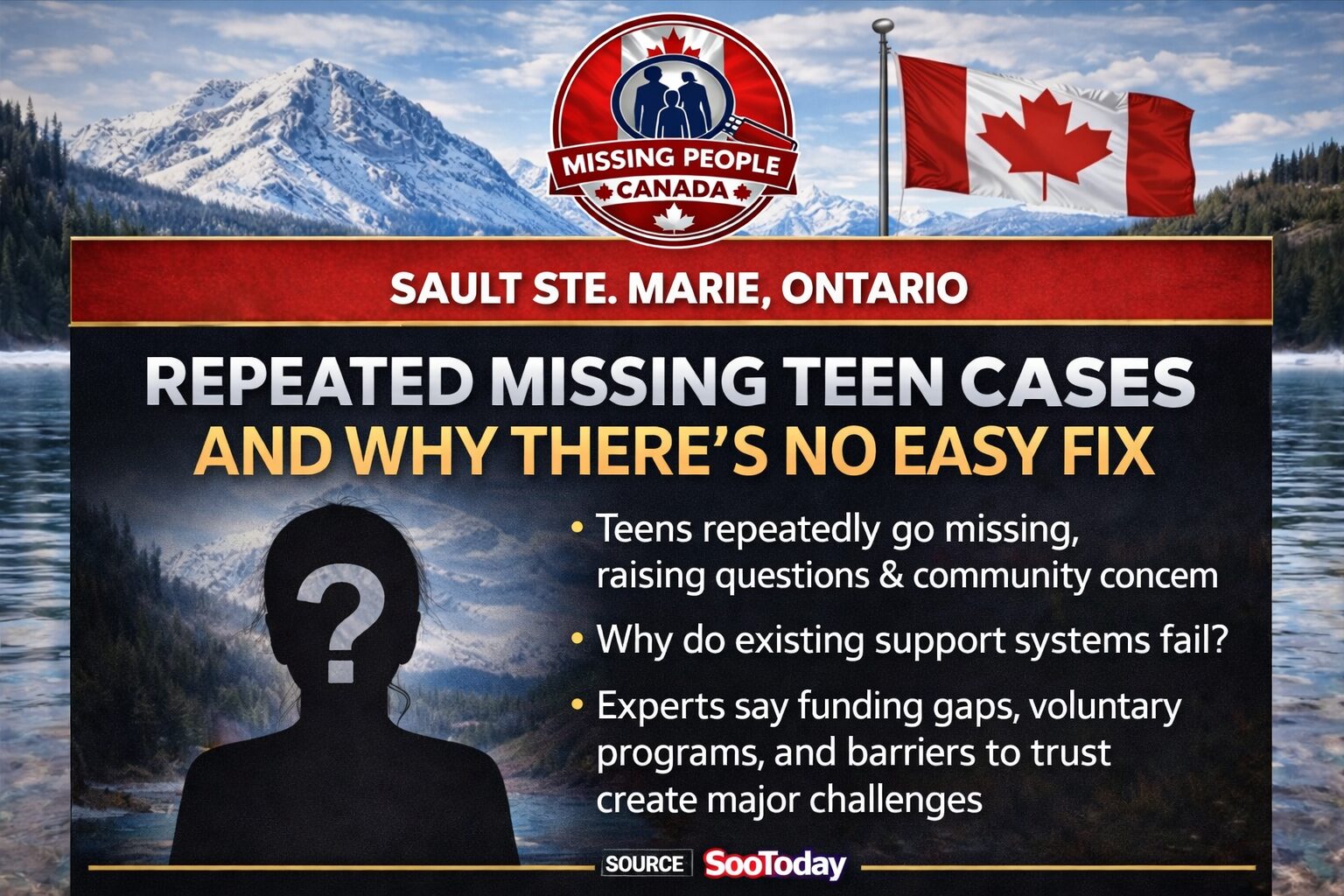

📰 Sault Ste. Marie, Ontario – Why Local Teens Keep Going Missing and Why There’s No Easy Fix
Over the past six months, residents of Sault Ste. Marie have repeatedly seen the same young faces appear in missing person alerts — followed shortly by updates that those youth have been found.
In some cases, this cycle has happened multiple times within a single week. While each alert ends with relief, the pattern itself has raised serious concerns across the community.
People are asking hard questions: What is happening in these young lives? Are existing supports enough? And why do so many youth continue to disappear again and again?
According to local service providers and police, the answers are complicated.
Ali Juma, CEO of Algoma Family Services, explains that youth living in group homes, foster care, treatment programs, or family residences cannot legally be held against their will.
These settings are not detention facilities. Even when youth are considered high-risk, authorities cannot simply prevent them from leaving unless strict criteria under Ontario’s Mental Health Act are met.
Sault Ste. Marie Police say every missing youth report triggers immediate action. Officers gather detailed information, check known hangouts, speak with family and friends, and review available digital activity to locate the young person.
Once youth are found, they are typically returned to parents or guardians, and officers attempt to connect families with available community resources.
However, police stress they do not have the authority to detain youth solely for being missing or repeatedly reported missing unless criminal or mental health legislation applies.
Experts say many at-risk youth come from unstable or traumatic environments and may struggle with mental health or addiction. These young people often develop coping behaviors that help them survive chaotic situations but don’t translate well into everyday life.
Naomi Andrews, a professor of Child and Youth Studies, explains that these protective behaviors can appear as withdrawal or acting out — and there is no quick solution.
Community organizations continue to step in where they can. The Algoma Youth Wellness Hub offers a drop-in space where youth can access meals, clothing, showers, and multiple support services without appointments.
While these programs can be highly effective, participation is voluntary unless court-ordered, and many youth disengage before long-term progress can be made.
Trust is another major barrier. Youth who have spent years navigating social systems often carry deep mistrust due to past negative experiences, making it difficult to accept help even when it’s available.
Professionals agree that forcing youth into programs rarely works. Real change depends on timing, trust, and readiness — and those windows of opportunity can close quickly.
Local advocates are calling for increased funding and expanded “wraparound” services that address housing, mental health, addiction, and family support together.
Sault Ste. Marie currently faces significant gaps, including a lack of child psychiatrists, no emergency youth shelter, and shortages of mental health nurses and family doctors.
Even when youth are ready to accept help, delays in accessing services can mean missed opportunities.
As the community continues to grapple with these challenges, one message remains clear: there is no single fix. Protecting vulnerable youth requires sustained investment, accessible services, and long-term trust-building.
🔗 Sources
SooToday – There Isn’t an Easy Fix
👉 What You Can Do
Share this article to help raise awareness about the challenges facing vulnerable youth in Sault Ste. Marie and across Ontario.
🌐 Visit CanadaMissing.ca to learn more about missing persons cases across Canada.
📧 Join our newsletter: https://missingpeople.ca/newsletter
💖 Support our work: https://ko-fi.com/missingpeoplecanada
📘 Join The Conversation On Facebook